
G.Skill Ripjaws V 16GB DDR4-3200 vs Corsair 16GB DDR4-3200
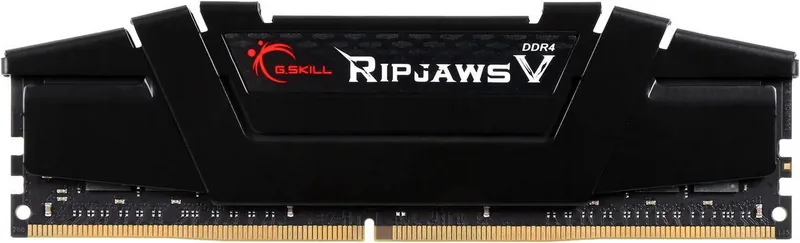
G.Skill Memory F4-3200C16S-16GVK 16GB 3200 MHz Ripjaws V RAM DDR4
The G.Skill Memory F4-3200C16S-16GVK 16GB 3200 MHz Ripjaws V RAM DDR4 is a 16 GB DDR4 memory kit (1x16GB) rated at 3200 MHz in the UDIMM form factor.
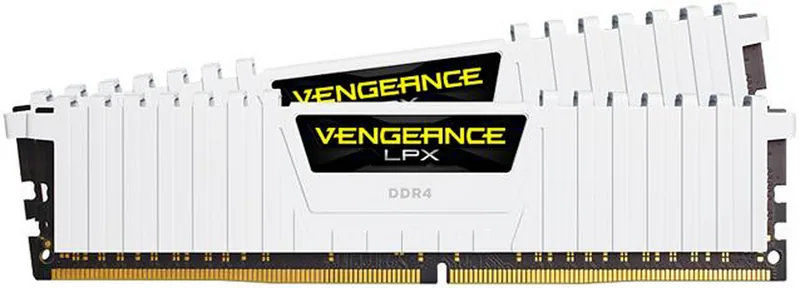
Corsair 3200MHz 16 GB DDR4 RAM CMK16GX4M1E3200C16
The Corsair 3200MHz 16 GB DDR4 RAM CMK16GX4M1E3200C16 is a 16 GB DDR4 memory kit (1x16GB) rated at 3200 MHz in the UDIMM form factor.
The G.Skill Ripjaws V 16GB (1×16GB) DDR4-3200 and a typical Corsair 16GB DDR4-3200 UDIMM kit sit in the same mainstream desktop memory band. For the end customer the key questions are single-module vs dual-channel kit, XMP profile reliability, and current street price.
Spec snapshot
| Spec | G.Skill Ripjaws V 16GB | Corsair 16GB DDR4-3200 (typ.) |
|---|---|---|
| Capacity | 16 GB | 16 GB |
| Modules | 1×16 GB (single) | Check kit (1×16 or 2×8) |
| Type | DDR4 | DDR4 |
| Speed | 3200 MHz | 3200 MHz |
| Form factor | UDIMM (desktop) | UDIMM (desktop) |
| XMP / EXPO | Yes (XMP) | Yes (XMP) |
Confirm whether the Corsair SKU on the quote is a single 16 GB stick or a 2×8 GB kit—dual-channel matters.
Where each wins
Dual-channel performance
A single 1×16 GB module runs in single-channel mode and leaves performance on the table. If the Corsair listing is a 2×8 GB kit, it is usually the better choice for gaming and bandwidth-sensitive work. If both are single sticks, performance is comparable once XMP is enabled.
Compatibility for the end customer
Both need a motherboard with DDR4 UDIMM slots. Enable the XMP profile in BIOS to reach 3200 MHz; otherwise the sticks may run at JEDEC defaults (2133/2400/2666).
Brand and warranty
G.Skill and Corsair both offer lifetime or long limited warranties on many desktop kits. End customers who already use one brand’s RGB or cooling products may prefer matching software.
Practical recommendation
| Scenario | Prefer |
|---|---|
| Quote is a true 2×8 GB dual-channel | Prefer the dual-channel kit |
| Only single 16 GB sticks available | Either; buy lower street price |
| End customer wants headroom later | Single 16 GB leaves a free slot |
| Strict dual-channel gaming build | Confirm 2×8 configuration |
End customers should prioritise dual-channel configuration over brand. Dealers, stockists and super-stockists must verify the exact module count (1×16 vs 2×8), live stock and pricing before quoting.